
There was a day when Argentina didn't even know his name; today, the entire nation will weep at the departure of that very Messi.
97 Repoter: 97 Admin
Publish : 4 hours agoUpdate: 3 minutes ago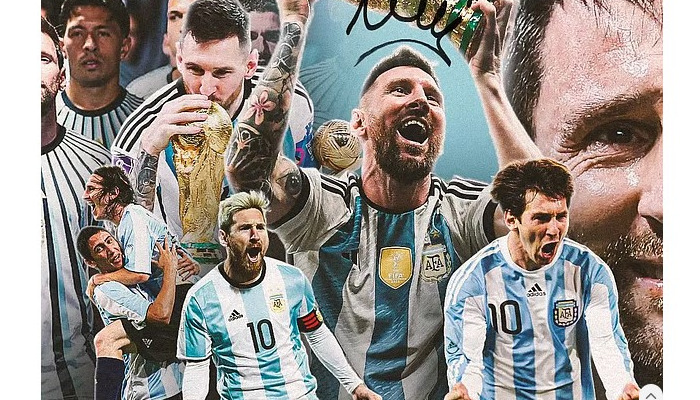
There was a day when Argentina didn't even know his name; today, the entire nation will weep at the departure of that very Messi.
There was a day when Argentina didn't even know his name; today, the entire nation will weep at the departure of that very Messi.
An AFA official was searching for a family's name in the Rosario telephone directory. Eventually, contact was made. But after asking for "Leonardo" on the other end of the line, a correction came: "His name isn't Leonardo; it's Lionel."
The boy whom Argentina once failed to recognize has, over time, become one of the greatest icons in the nation's football history. On Tuesday, he will take the field for Argentina for the last time at the Monumental Stadium in Buenos Aires. That is where the curtain will fall on an international career spanning more than two decades.
Yet, the relationship between Messi and Argentina began amidst mistaken identities, uncertainty, and distance.
Struggling to find the "boy from Rosario" in Barcelona
Messi had moved to Barcelona during his teenage years. His talent was gradually blossoming there; Spain had even begun to view him as a future prospect for their national team. Meanwhile, back in his own country, there was little awareness of him.
In 2003, Argentina lost 3–2 to Spain in the semi-finals of the Under-17 World Cup in Finland. Reportedly, after the match, Messi’s Barcelona teammate Cesc Fàbregas told the Argentines that their best player had actually stayed behind in Barcelona.
Hugo Tocalli, the coach of Argentina's youth team, later revealed that an official from the Spanish squad had told him during that tournament that Argentina needed "that boy from Rosario who plays for Barcelona."
The problem was—finding that boy was no easy task.
AFA official Omar Souto eventually located the Messi family by scouring the Rosario telephone directory. However, when he called, he asked for "Leonardo." The family informed him that the name was not Leonardo, but Lionel.
The confusion did not end there. Journalist Sergio Levinsky has noted that when the Argentine federation inquired about Messi, they mistakenly spelled his surname as "Mecci"—a misspelling that stemmed from the assumption that he was of Italian descent.
The path to the national team was not easy either.
Messi made his debut for Argentina in the Under-20 team in 2004, yet doubts persisted. During the 2005 Under-20 World Cup in the Netherlands, he was initially kept on the bench.
This was largely because he did not live in the country; having grown up in Barcelona, Messi was often viewed by many almost as a foreigner. However, his rise in club football was so rapid that the possibility of overlooking him for the national team was steadily diminishing.
His senior national team debut was also a nightmare. In August 2005, just 47 seconds after taking the field against Hungary, Messi was shown a red card and sent off.
Criticism ensued. Questions arose because his brilliant club form was not translating to the Argentine jersey. At one point, he was even mocked as "pecho frío"—implying he lacked passion for his country.
Messi’s journey with Argentina in the 2006 and 2010 World Cups also did not go as smoothly as expected.
The tears of 2016 transformed the relationship.
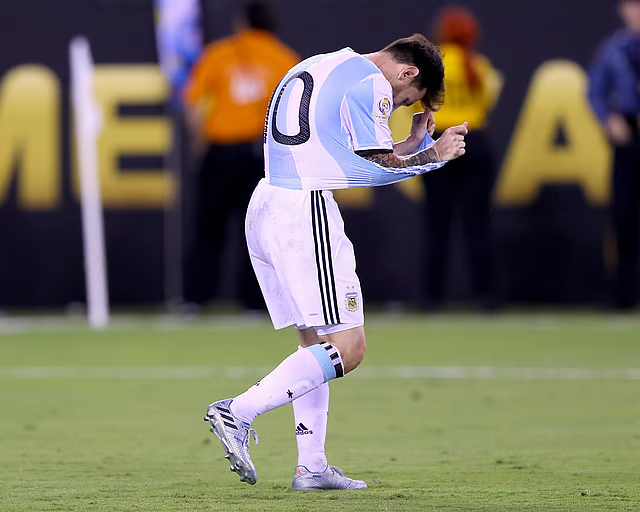
There was the loss to Germany in the 2014 World Cup final, followed by Messi missing a penalty in the shootout against Chile during the 2016 Copa América final. After suffering defeat in consecutive finals, a disheartened Messi announced his retirement from the national team.
Surprisingly, however, this very event transformed his relationship with the Argentine people.
Instead of criticism, the entire nation began urging him to return. People started to realize that the player who had carried the team to final after final could not be held solely responsible for every failure. Messi’s fighting spirit during a difficult World Cup qualifier against Colombia in 2011 played a pivotal role in shifting the fans' perception of him. As Levinsky describes it, Messi fought so hard in that match that he vomited from exhaustion—yet he still led the team to victory.
That marked the beginning of a new chapter in the relationship between Messi and Argentina.
There was no looking back after that.
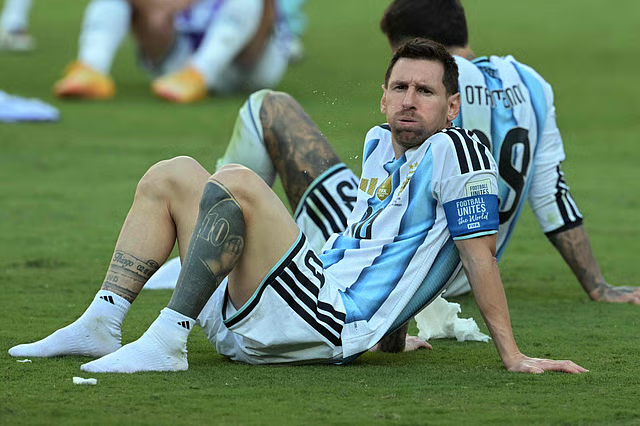
Under Lionel Scaloni, Messi seemed to discover a new identity within the national team. He ended Argentina’s 28-year trophy drought by winning the Copa América in 2021. Subsequently, he led Argentina to World Cup glory in 2022, a feat achieved after a 36-year wait.
More success followed: another Copa América title, leadership on the World Cup stage, and the unconditional love of his countrymen.
The very Messi who was once criticized for lacking attachment to his country became one of the defining symbols of Argentina's national identity.
Like Maradona, yet distinct
Throughout his career, Messi has been compared to Diego Maradona in Argentina. However, the paths to earning the nation's love differed for the two.
Argentina embraced Maradona almost immediately. For Messi, that love grew gradually; it took time for Argentines to warm up to a player who had spent his childhood and a significant portion of his career abroad.
Sergio Levinsky offers a poignant analogy: the story of falling in love with Messi is like suddenly discovering you have an 18-year-old son you never knew existed.
That once-unknown son has now become one of the people closest to Argentina's heart.
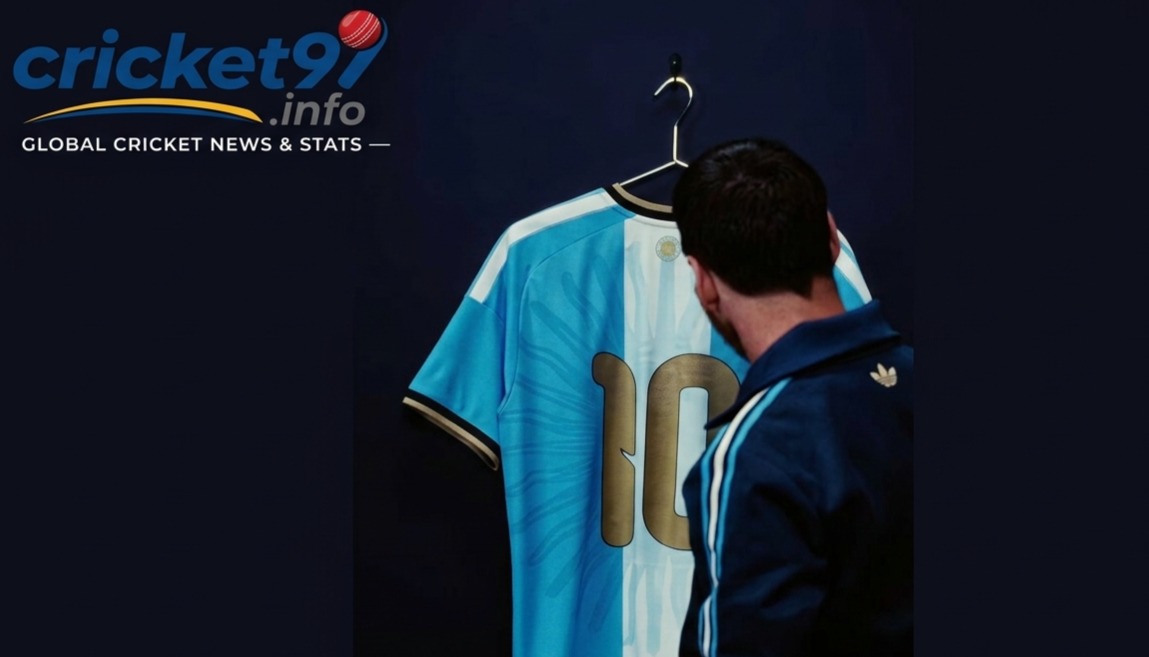
On Tuesday (early Wednesday morning, Bangladesh time), Messi will wear the Argentina jersey for the last time in a match against Benin at the Monumental Stadium in Buenos Aires. The AFA has announced that this match has been specially organized as his farewell game.
There was a time when Argentina didn't even quite know his name. Yet today, at his final match, thousands of voices across the country will call out in unison—
Lionel Messi.