
Why Has No Goalkeeper Won the Ballon d’Or in 63 Years?
97 Repoter: 97 Admin
Publish : 1 hour agoUpdate: 2 minutes ago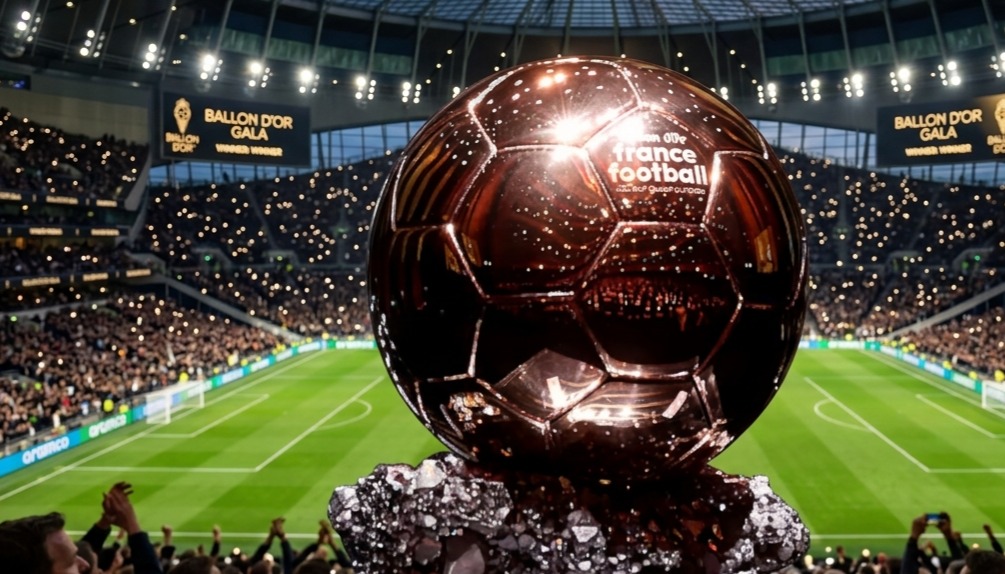
Why Has No Goalkeeper Won the Ballon d’Or in 63 Years?
Why Has No Goalkeeper Won the Ballon d’Or in 63 Years?
Do you remember Oliver Kahn?
The 2002 World Cup final is probably the first memory that comes to mind. Throughout that tournament, Kahn looked almost unbeatable in Germany's goal. His performances were so impressive that he won the Golden Ball as the tournament's best player.
But one mistake in the final against Brazil changed the narrative.
Kahn failed to hold Rivaldo's shot, allowing Ronaldo to score from the rebound. Ronaldo later added another goal as Brazil won the World Cup. Suddenly, one mistake overshadowed much of Kahn's outstanding tournament.
Yet Kahn remains the only goalkeeper to have won the World Cup's Golden Ball. He also finished third in the 2002 Ballon d'Or voting.
Had the final gone differently, Kahn might have become only the second goalkeeper to win the Ballon d'Or after Lev Yashin.
But that never happened.
Yashin remains the only goalkeeper to have won football's most prestigious individual award. His Ballon d'Or triumph came in 1963, meaning 63 years have now passed without another goalkeeper lifting the trophy.
Goalkeepers Have Come Close
It is not as though goalkeepers have been completely absent from the Ballon d'Or race.
Italy legend Dino Zoff finished second in 1973. He was outstanding for Juventus and also went 1,042 minutes without conceding a goal for Italy.
After Italy won the 2006 World Cup, Gianluigi Buffon finished second in the Ballon d'Or voting. In 2014, after Germany's World Cup triumph, Manuel Neuer also finished second.
So goalkeepers can reach the top of the voting.
They simply have not been able to take the final step since Yashin.
Why Is It So Difficult for Goalkeepers?
The answer may lie in the way football measures individual performance and, more importantly, the moments fans remember.
Goals are the ultimate currency of football. When the ball hits the net, stadiums erupt. A last-minute goal from a forward can become the headline of the next day's newspaper.
A spectacular save earlier in the same match may receive only a paragraph in the match report.
That creates a problem for goalkeepers.
A forward can be ineffective for 89 minutes and still become the hero by scoring the winning goal. A goalkeeper can perform brilliantly for 89 minutes and lose much of the spotlight because of one mistake.
Kahn's 2002 World Cup final remains one of the clearest examples.
Not Every Goalkeeping Contribution Appears in the Statistics
A goalkeeper's contribution goes far beyond saves.
Imagine a goalkeeper reading a through ball before the attacker can reach it, rushing off his line and clearing the danger before a shot is even taken.
There is no spectacular save. No highlight clip. Perhaps not even an obvious statistic.
Yet the decision can be just as important as a brilliant one-on-one save.
A goalkeeper's save can also influence the psychology of an entire team. A series of important stops can increase the confidence of defenders while putting pressure on the opposition.
These effects are difficult to measure because many of a goalkeeper's most important contributions are indirect.

Even xG Cannot Tell the Whole Story
Goals and assists provide a relatively straightforward way of measuring attacking players. Modern metrics such as expected goals, or xG, have made it easier to assess the quality of chances.
For goalkeepers, post-shot expected goals can help estimate how many goals a goalkeeper prevented based on the quality and placement of the shots faced.
But even these numbers have limitations.
Positioning, anticipation, sweeping outside the box, communication with defenders and decision-making cannot be completely captured by a single metric.
A goalkeeper may prevent a dangerous attack before it becomes a shot. That contribution can be just as valuable as making a spectacular save, but it is much harder to quantify.
Brian Clough Understood the Value of a Goalkeeper
Nottingham Forest legend Peter Shilton was highly valued by his famous manager Brian Clough.
Clough believed a good goalkeeper could earn his team 15 to 20 points over the course of a season.
The reasoning was simple.
A world-class goalkeeper does more than stop goals. He gives confidence to everyone in front of him. Defenders can play more aggressively because they know they have a reliable last line of defence.
Forwards can also play with greater freedom because one goal may be enough to win a match when there is such security behind them.
Yashin, Kahn, Buffon and Neuer
Every generation has produced goalkeepers capable of changing matches and tournaments.
Lev Yashin represented excellence in his era. Dino Zoff became a symbol of consistency and defensive reliability. Oliver Kahn showed how influential a goalkeeper could be at a World Cup.
Buffon became renowned for his extraordinary shot-stopping ability.
Manuel Neuer went even further, redefining the position by combining elite goalkeeping with the responsibilities of a sweeper and an additional passing option outside the penalty area.
Yet none of them repeated Yashin's Ballon d'Or achievement.
Is a Clean Sheet Enough?
The clean sheet remains one of the most familiar statistics used to discuss goalkeepers. But it cannot fully measure a goalkeeper's quality.
How many goals did he prevent? How effectively did he control his area? How good were his decisions? How much did his passing contribute to build-up play? How did his presence change the way the team defended?
All of these factors matter.
Modern football analytics is increasingly trying to answer those questions, but there is still no single, universally recognised statistic for goalkeepers that carries the same simplicity and popularity as goals and assists.
Why the Ballon d'Or Remains So Difficult
This may be the heart of the issue.
Individual awards such as the Ballon d'Or are often built around a narrative: goals, assists, decisive moments, big-game performances and trophies.
Creating that narrative is more difficult for goalkeepers.
Their greatest moment may simply be preventing something from happening.
A spectacular goal creates an immediate emotional reaction. A goalkeeper's greatest contribution may be stopping that goal from ever existing.
That makes the impact real—but often less visible.
The Yashin Trophy
Perhaps that is why the Yashin Trophy was introduced in 2019 to recognise the world's best goalkeeper separately.
But it also raises a bigger question: should goalkeepers need a separate award, or should their performances be evaluated on equal terms with every other position in the Ballon d'Or race?
A goalkeeper may not score a single goal over 90 minutes. Yet one save, one decision or one perfectly timed intervention can completely change the outcome of a match.
So the 63-year wait since Yashin is not simply a story about goalkeepers falling short. It is also a story about how football defines and measures individual greatness.
The person responsible for stopping football's most exciting moment—a certain goal—may still be the person most easily overlooked.
And Lev Yashin's unique place in Ballon d'Or history remains the clearest evidence of that paradox.